Automobile Parts
List of automobile spare parts dealers in Africa and importers in Africa of auto parts. Database of auto parts dealers in Africa listed in the Automobile Parts category of the Africa Business Directory

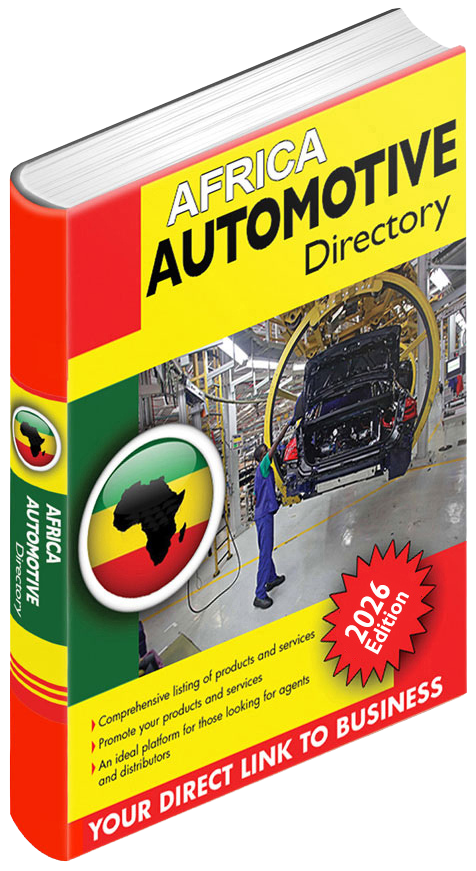
Download Complete Africa Automotive & Spare Parts Importers Directory ($149)
Skip manual browsing — get the full Excel sheet of verified Automobile Parts importers, wholesalers & distributors across Africa.
Headquartered in Durban, Toyota Tsusho Africa partners with developers, contractors, and institutional buyers throughout South Africa as a full-service motor vehicle spare parts, fleet maintenance supplies, and commercial transport provider. Supply Chain Management and Manufacturing Support Specialist. Toyota Tsusho Africa, established in 1999, specializes in Supply Chain Management and Production Assembly, delivering a range of value-adding solutions to the South African Automotive Industry. Toyota Tsusho Africa provides value and expertise to customers through its 5 Divisions, with a business service offering consisting of procurement and supply of production parts, raw material, and equipment as well as parts assembly and steel processing. The offices, warehousing, and processing facilities are strategically located in Durban and Pretoria to ensure optimal service and delivery output to customers. Day-to-day inquiries handled by our team span Genuine & Aftermarket Motor Vehicle Spare Parts, Commercial Fleet Consumables, Suspension, Brake & Engine Components, Corporate Supply & Logistics, supported by clear technical guidance on sizing, application, and installation. Structured parts cataloguing, verified OEM and aftermarket sourcing, and prompt counter and upcountry dispatch minimize vehicle downtime for commercial fleets. Transport operators, corporate vehicle fleets, independent garages, government departments, and institutional buyers procure spare parts through our team. Share your scope of work, drawing schedules, or equipment needs with our commercial specialists at Toyota Tsusho Africa in Durban for accurate pricing and delivery planning.

Blue Strata facilitates the import transaction from order placement, confirmation and tracking through to th e hedging of foreign exchange ri sk and the management of import logi stics until delivery to your warehouse. On delivery of the goods, the company provides a single invoice consolidating the total landed Rand cost per item, effectively becoming a local supplier of your imported product.By financing the cost of goods as well as the forwarding and clearing costs involved in the import transaction, Blue Strata releases your working capital that is tied up in your import and provides you with payment terms that closely match your cash flow cycle.
Steel And Engineering Industries Federation Of South Africa verified
location_on Johannesburg, South Africa
workspace_premium Automobile Parts
The Steel and Engineering Industries Federation of Southern Africa (SEIFSA) is a national employer Federation representing the metal and engineering industry. For 70 years, SEIFSA has provided active support for employer Associations and lobbied for policies that have improved the business environment in which its members operate. SEIFSA’s management team represents employers associations, as the recognised voice of the metal and engineering industry, on a number of organisations that are critical to the success of the industry as a whole including: Business Unity South Africa (Busa) Commission for Conciliation, Mediation and Arbitration (CCMA) Electricity Intensive Users Forum Eskom Task Group on Electricity Manufacturing, Engineering and Related Services Seta (merSETA) Metal and Engineering Industries Bargaining Council (MEIBC) Metal Industries Benefit Funds Administrators (Mibfa) National Economic, Development and Labour Council (Nedlac) Technical Sectoral Liaison Committee on Trade Agreements of Nedlac South African Institute of Iron and Steel Downstream Development Committee Nedlac’s Fund for Research into Industrial Development, Growth and Equity Committee Institute of Safety Management SEIFSA, through its membership of these bodies, has over the years positively influenced legislation and policy affecting labour relations, skills development as well as economic and trade matters.
Southern Africa Stainless Steel Development Association verified
location_on Rivonia, South Africa
workspace_premium Automobile Parts
The Southern Africa Stainless Steel Development Association(Sassda), is one of the most active stainless steel industry associations in the world and has, since 1964, been involved in increasing the awareness and use of stainless steel in Southern Africa. The organisation provides a platform for Sassda members to collectively promote the sustainable growth and development of the industry with the main emphasis on stainless steel converted within the South African economy. Sassda also provides a comprehensive list of services to its member base including technical information and advice, education, training and skills upgrading, a range of publications and marketing, industry and business development support.
South African Petroleum Industry Association (Sapia) verified
location_on Sandton, South Africa
workspace_premium Automobile Parts
SAPIA is a trade organisation representing the main petroleum and liquefied petroleum gas companies in South Africa. SAPIA plays a strategic role in addressing a range of common issues relating to the refining, distribution and marketing of petroleum and LPG products, as well as promoting the industry’s environmental and socio-economic progress. SAPIA fulfills this role by proactively engaging with key stakeholders, providing research information, expert advice and communicating the industry’s views to government, members of the public and media. Our key priorities are as follows: • Promote industry transformation and skills development. • Facilitate the security of supply of petroleum products. • Promote health, safety, security and environment within the industry. • Provide input into the development of climate change policy and regulations including that pertaining to the monitoring, measuring and reporting of GHG emissions. • Make the transition to cleaner fuels in a manner that avoids any supply disruptions in the most cost-effective way possible. • Contribute to policy formulation, implementation and a fair regulatory framework for all.
Looking to Export Auto Spare Parts & Accessories to Africa?
Get your products listed at the top of this category and receive direct inquiries, WhatsApp RFQs, and buyer contacts across Nigeria, Kenya, Ghana, Tanzania, and South Africa.
South African Insurance Association verified
location_on Weltevreden Park, South Africa
workspace_premium Automobile Parts
The South African Insurance Association (SAIA) is the representative body of the short-term insurance industry. It represents the industry to all relevant stakeholders to ensure a sustainable and dynamic industry. SAIA has 59 members, comprising all categories of short-term insurers, including reinsurers. Its members abide by the SAIA Code of Conduct, which ensures adherence to best-practice industry standards and self-regulation. To promote and represent the interests of the short-term insurance industry, while leading and enhancing the efforts of the industry to become recognised and trusted as an important contributor to the South African economy and society. To encourage fair and ethical treatment of short-term insurance customers To favourably represent the short-term insurance industry in such a way that all stakeholders have trust and confidence in the industry To create an environment in which industry members can share information, debate important and relevant issues, and create a common vision for the short-term insurance industry To create opportunities for the industry and to embark on initiatives that will enhance its image and reputation amongst all stakeholders To promote understanding of short-term insurance to all stakeholders To promote awareness of the industry and its contributions to society and the South African economy

South African Institute Of Foundrymen verified
location_on Wadeville, South Africa
workspace_premium Automobile Parts
Established in 1939 as a branch of the Institute of British Foundrymen, the SAIF was formed in 1964 and registered as an organisation not for gain in 2009. The SAIF has positioned itself as the voice of the Foundry Industry in meeting the common challenges facing its member companies in cooperation with the authorities and learning institutes. In collaboration with the National Foundry Technology Network (NFTN), a proud initiative of the Department of Trade and Industry (the dti) and University of Johannesburg (UJ) Metal Castings Technology Station (MCTS), it facilitates initiatives to assist the industry in overcoming challenges. Gauteng Foundry Training Centre – SAIF managed the conception of the plant & machinery and some of the building construction on behalf of all the stakeholders. Building partnerships – By representing industry and coordinating initiatives to add value to the assistance provided by government and other institutions.

South African Chamber Of Commerce & Industry (Sacci) verified
location_on Johannesburg, South Africa
workspace_premium Automobile Parts
With wide-ranging changes taking place in South Africa, as well as internationally, business people find it increasingly difficult to operate in isolation and ensure survival. The chamber movement represented by the South African Chamber of Commerce and Industry (formally known as South African Chamber of Business (SACOB) and its almost 50 constituent chambers is a lifeline for business people. The SACCI membership comprises approximately 20 000 small, medium and large enterprises across the breadth of the nation and across all economic sectors. Large enterprises are generally direct members of SACCI while small and medium enterprises are members through more than 50 local and regional chambers and 15 national associations. click here to get a full overview of the South African Chamber of Commerce and Industry. Trade Missions Trade missions and visiting business executives from overseas seeking buying or selling opportunities use SACCI as their point of contact with local businesses. We arrange appointments and also set up presentations on how to do business with various countries. Exhibitions We assist members with information on local and international exhibitions.

South African Bureau Of Standards (Sass) verified
location_on Pretoria, South Africa
workspace_premium Automobile Parts
SABS is a statutory body that was established in terms of the Standards Act, 1945 (Act No. 24 of 1945) and continues to operate in terms of the latest edition of the Standards Act, 2008 (Act No. 8 of 2008) as the national standardisation institution in South Africa, mandated to: Develop, promote and maintain South African National Standards (SANS) Promote quality in connection with commodities, products and services Render conformity assessment services and assist in matters connected therewith. The SABS provides the platform for quality services and products which is the key differentiator in an increasingly competitive environment. The SABS strategic objective contributes to the efficient functioning of the economy by: Developing standards to advance the socio-economic well-being of South Africa in the global economy. Delivering relevant conformity assessment services that facilitate access to markets for South African industry, thereby improving its competitiveness in the global trade environment. The SABS, with its rich history in standardisation, will continue to play a significant role in ensuring that industry is kept abreast of the pace of the dramatic transition of the world economy through standards development and quality assurance services, thereby providing industry with the quality edge.
Retail Motor Industry Organisation (Rmi) verified
location_on Randburg, South Africa
workspace_premium Automobile Parts
The RMI, with a membership of 7500, provides a very effective collective voice that gives considerable clout to its members. It is through this collective voice that the RMI strive to create better trading conditions for its members. The reality is that as a small/medium individual business, one has very little say in affairs. Government will not talk to thousands of individual businesses. Oil companies, insurance companies, vehicle manufacturers and unions are not going to be influenced by individuals either. The RMI is the solution. Never before in the history of this industry has it been more relevant and necessary to belong to an Organisation like the RMI. You may well ask why? Very simply because industry is faced on a daily basis with continual and rapid change, no one is doing business in the same way as they did 2 to 3 years ago. Future survival of business will largely depend on a business’ ability to proactively manage that change.